Posts

Showing posts with the label history

Five of the most astonishing ancient artifacts from all over the world

Image
  Archaeologists, both professional and amateur ones, unearth wonders from tens of thousands of years past. Every once in a while, their discoveries are incredibly puzzling that they remain unexplained. These invaluable artifacts spark conversations and further discoveries in order to prove and explain their existence. Image source: iraqicivilsociety.org The Antikythera mechanism was discovered in a shipwreck buried beneath 45 meters of water off the coast of the Greek island of Antikythera, shares Sadigh Gallery. Built to calculate astronomical position, it is made up of a box with dials on its outside, with intricately assembled gear wheels placed within the box. The Saqqara bird was discovered in 1898 through an excavation in Pa-di Imen tomb in Egypt. Made from a sycamore tree, the artifact weighs less than 40 grams, with a wingspan that is over 7 inches. The Baghdad Battery is an ancient device consisting of a 5 ½ inch tall clay vessel, with a copper cylinder glued...

Recent archaeological discoveries in the Holy Land

Image
In some parts of the world, archaeological discoveries are few and far between. Such is not the case for the Holy Land and its neighboring regions. Recent findings in Israel were more than mundane discoveries; rather, they are ones that help paint the huge picture of eras in the City of David. Image source: breakingisraelnews.com Image source: thesun.co.uk Sadigh Gallery reports that two micro 2,600-year-old paleo-Hebrew inscriptions were found during an excavation in Givati Parking Lot in the City of David. Both inscriptions were found just a few weeks apart. A clay seal impression read “(belonging) to Nathan Melech, Servant of the King,” with Nathan-Melech being one of the officials in King Josiah’s court. Nathan Melech was mentioned in the Bible in 2 Kings. The other one, a bluish agate stone seal, maintains an inscription that says, “(belonging) to Ikkar son of Matanyahu.” A stone altar etched with alluring clues about an uprising from 2,800 years ago was...

A walkthrough on ancient wood preservation

Image
A close eye on proper storage, conservation and display techniques, and careful handling is needed for the long-term preservation of ancient wooden artifacts. Those who keep wooden artifacts in good shape know that their prime task is not to harm historical pieces. Image source: Twitter.com Image source: internationaltimber.com Wood preservation is mostly similar to preserving other materials such as metal, rubber, and others. Historic wooden objects must be kept from excessive levels of light, particularly fluorescent light and sunlight. These kinds of light carry high amounts of ultraviolet radiation, the most harmful of all light forms. Sadigh Gallery recommends collectors to keep their antique pieces out of fluorescent light or direct sunlight. Extreme cold and hot temperatures damage wood and other materials. Wooden artifacts must be stored in areas with climate-control systems, and never in attics, basements, and sheds. Excessive humidity can encourage mo...

The story behind the Ides of March Denarius coin

Image
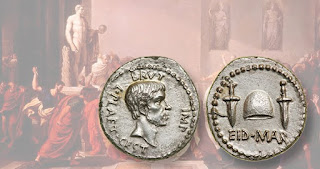
In 2011, a single coin was sold for over half a million dollars. The coin was a mint condition Ides of March Denarius, one of the most sought after ancient coins with tremendous historical value. This is the holy grail among collectors of ancient coins. According to antique experts at Sadigh Gallery, the story behind the production of the coin adds to its value today. Image source: coinworld.com Image source: antiquanova.com The Ides of March is a day in the Roman calendar, March 15. This day was a deadline romans set for debt settlement as well as other religious beliefs. It was also the day of Julius Caesar’s assassination at the hands of his senate led by Marcus Junius Brutus. Julius Caesar was famous for becoming an emperor after refusing to relinquish the powers vested on him by the state during times of war. He was also the first emperor to put his face on the coins instead of gods or deities. Two years after the assassination of Julius Caesar, Brutus i...

Casting light on the Roman oil lamp

Image
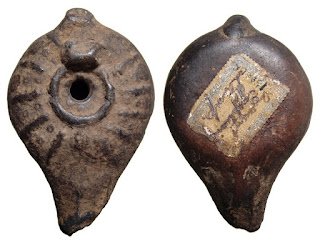
Image source: ancientresource.com At the height of its power, the Roman Empire covered much of West Asia, approximately a fourth of Europe, and the entire northern coastal area of Africa. The vastness of its territory meant that society today has been gifted with countless ancient artifacts and ancient arts from the Empire scattered across the world. An example of the artifacts is the Roman oil lamp, which Sadigh Gallery has plenty of. Almost every Roman then possessed an oil lamp because it was their primary source of light during the night. Oil lamps were said to be one of the most common items that can be seen in households during the ancient times. While several materials can be used for creating ancient oil lamps, the Roman versions were usually made of ceramic, particularly gypsum or plaster. This allowed for ornamentation of the lamp to the liking of its creator. The Romans were quite fond of divinity, art, and nature, themes that were apparent in the design of t...